Gold · 4 min read · Published , updated
18K gold explained: yellow, white and rose
Every Lavandela piece is made in solid 18K gold. Here is what that means and how the three colours differ.
What 18K means
Pure gold is 24 karat. 18K gold is 18 parts gold to 6 parts other metals, which makes it 75% gold. The other metals give it strength for everyday wear and set its colour. 18K has a richer colour than 14K (58.5% gold) and is the traditional standard for fine jewellery in Europe and the Middle East.
Yellow gold
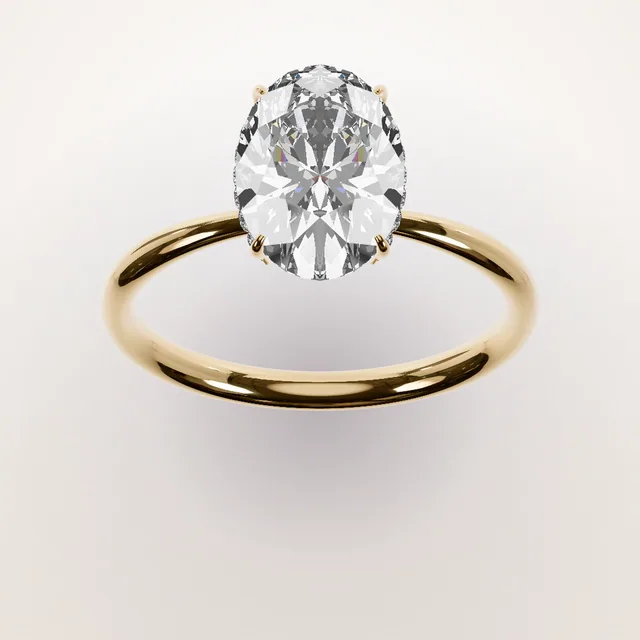
Alloyed with silver and copper, 18K yellow gold keeps a warm, deep colour close to pure gold. It is classic and forgiving: it complements warmer diamonds and never needs replating.
White gold
18K white gold is gold alloyed with white metals such as palladium or silver, which gives it a pale, slightly warm grey colour. Most white gold jewellery is finished with a thin layer of rhodium for a bright white shine. Over years of wear that layer can soften, and it can be refreshed by a jeweller.
Rose gold
Rose gold gets its pink tone from a higher proportion of copper. It is durable, does not need plating, and its colour can deepen very slightly over time.
How gold affects price
We price each setting from its actual weight of 18K gold, measured for your ring size, and our current gold price, which we re-set whenever the gold market moves more than 5%. Heavier, wider designs contain more gold; finer designs contain less. White gold is slightly denser than yellow, and rose gold slightly lighter.
Platinum and 14K
We currently make every setting in 18K gold.