Settings · 6 min read · Published , updated
How to choose an engagement ring setting
The setting decides how the diamond sits, how it catches light and how the ring lives on the hand day to day. Here is how to think it through.
Start with the hand, not the catalogue
Think about how the ring will be worn. Someone who works with their hands, trains often or wears gloves will get on better with a lower profile and fewer edges to catch. Someone who wants the diamond to be the first thing people notice may prefer it raised and framed.
Prongs or bezel
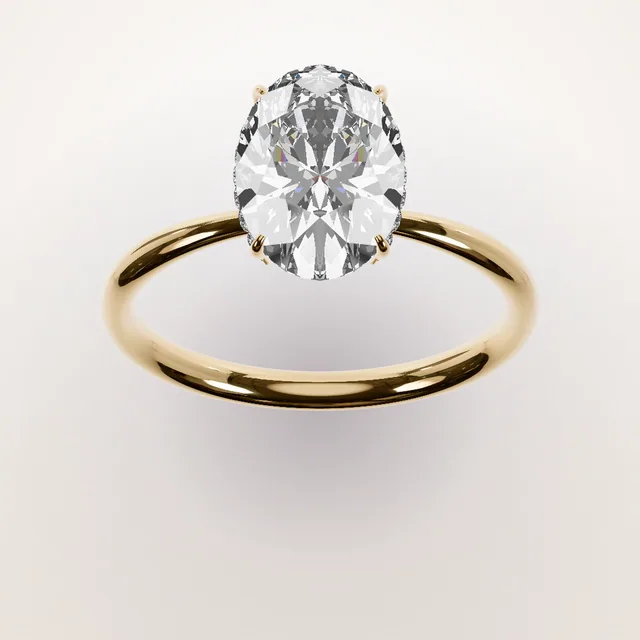
Prongs (also called claws) hold the diamond with small gold tips. They show the most of the stone and let in the most light. Four prongs show a little more diamond; six prongs add security and make a round stone look rounder. A basket head joins the prongs with a gold rail below the stone and sits comparatively low. A tulip head shapes the prongs like opening petals, which looks delicate from the side. Cathedral shoulders arch up from the band to lift the diamond.
A bezel wraps the diamond in a thin rim of gold. It protects the edge of the stone, has nothing to snag on clothing and gives a clean, modern outline. It shows slightly less of the diamond's side.
Solitaire, halo or side stones
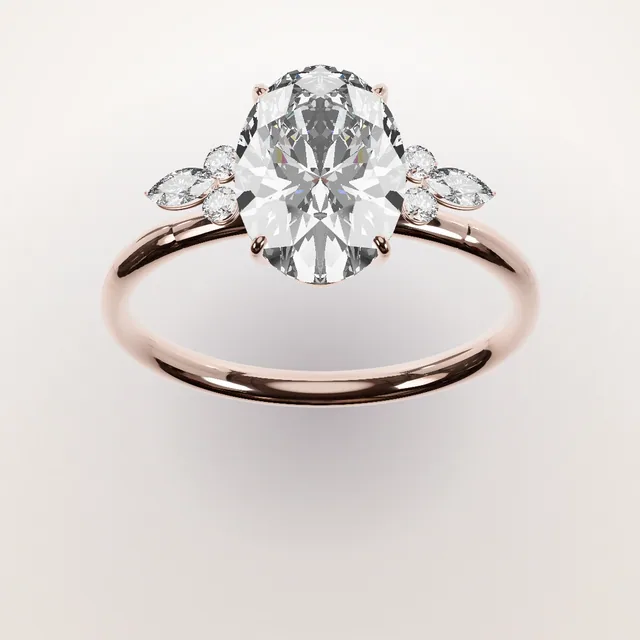
A solitaire is one diamond on a plain or pavé band: the diamond does all the talking, and it pairs easily with almost any wedding band. A halo surrounds the centre with small diamonds, making the whole face look larger and adding sparkle. A hidden halo places that ring of diamonds underneath the centre stone, so it is seen from the side rather than from above. Three-stone designs set two side diamonds next to the centre.
Band width
Fine bands (under 2 mm) make the centre diamond look larger by contrast and feel delicate. Classic widths (2–3 mm) balance durability and elegance. Wider bands feel substantial and suit bolder designs. If you plan to wear a wedding band alongside, a finer engagement band keeps the stack comfortable.
Gold colour
Yellow gold warms the look of a diamond and flatters warmer skin tones; white gold emphasises a bright, icy look; rose gold is soft and romantic. Diamonds lower on the colour scale (around H to J) often look whiter in white gold, while yellow and rose gold are forgiving of a touch of warmth. See 18K gold explained.
Then choose the diamond
Once the setting is decided, you can filter our natural diamonds by the shapes it holds. Every setting page shows the compatible shapes and lets you preview the ring in 3D with a real diamond.